Comment les bactéries sont utilisées dans les processus de nettoyage des usines de traitement des eaux usées
Nous y pensons rarement, mais chaque jour, des millions de litres d'eaux usées sont purifiées grâce à des bactéries. Sans elles, nos stations d'épuration ne fonctionneraient pas. Elles décomposent les matières organiques, réduisent la pollution et permettent à l'eau de retourner à la nature. C'est un processus biologique éprouvé sur lequel la société s'appuie depuis longtemps.
Chez Pure Effect, nous nous sommes posé une question simple : si les bactéries sont si efficaces pour décomposer les matières organiques lorsqu'elles atteignent la station d'épuration, pourquoi attendre ?
Le même principe biologique peut-il être utilisé là où la saleté apparaît ? La réponse est oui. C'est aussi la base de notre vision du nettoyage.
Les stations d'épuration travaillent avec la nature, pas contre elle
Lorsque les eaux usées arrivent à une station d'épuration, elles contiennent de grandes quantités de matières organiques : graisses, restes alimentaires, squames et autres résidus biologiques.
Dans la partie biologique du processus d'épuration, ce ne sont pas des produits chimiques puissants qui font le gros du travail. Au lieu de cela, les conditions sont créées pour que les bactéries fassent ce pour quoi elles ont évolué pendant des milliards d'années : décomposer les matières organiques à l'aide d'enzymes.
C'est en fait le même processus qui se produit partout dans la nature. Lorsque les feuilles se transforment en terre, lorsque le compost se décompose ou lorsque la matière organique disparaît dans la forêt, ce sont les micro-organismes qui font le travail. La station d'épuration utilise simplement la propre méthode de la nature sous forme contrôlée.
Le même principe biologique peut-il être utilisé à la maison ?
C'est là que l'idée et la fonction de Pure Effect commencent. Dans un système traditionnel, nous nettoyons nos maisons avec des produits de nettoyage chimiques et de l'eau. Ensuite, la saleté est transportée vers la station d'épuration, où les bactéries décomposent la matière organique restante.
Nous pensons que le meilleur endroit pour décomposer les résidus organiques est là où ils apparaissent, et non pas seulement une fois qu'ils ont été rincés. C'est pourquoi nos produits utilisent le même principe biologique que les stations d'épuration, mais directement à la maison. Des bactéries sélectionnées et leurs enzymes commencent à travailler dès le plan de travail de la cuisine, le sol de la salle de bain, dans nos vêtements et autres surfaces textiles où les résidus organiques s'accumulent.
Cela ne signifie pas pour autant que le nettoyage biologique est une technologie nouvelle ou non testée. Au contraire, le nettoyage biotechnologique est utilisé depuis plus de 30 ans dans le nettoyage professionnel, notamment dans les écoles, les hôpitaux, les aéroports, les stades sportifs et autres environnements publics où de grandes surfaces très sollicitées avec des problèmes récurrents de saleté et d'odeurs sont nettoyées quotidiennement.
Alors pourquoi n'en avez-vous peut-être jamais entendu parler ? Une explication est que les produits de nettoyage chimiques traditionnels ont longtemps été la norme, tant dans le nettoyage professionnel que sur le marché grand public. Le nettoyage biologique a existé en parallèle, mais a surtout été utilisé là où ses avantages à long terme sont devenus particulièrement évidents.
Dans l'article "Pourquoi le nettoyage biologique est-il utilisé dans le nettoyage professionnel ?", nous expliquons comment la technologie a évolué et pourquoi elle est de plus en plus courante dans les environnements domestiques.
Les résidus organiques sont la clé
Pour comprendre pourquoi le nettoyage biologique fonctionne, il faut aussi comprendre de quoi est souvent composée la saleté.
À la maison, il s'agit en grande partie de résidus organiques : graisses de cuisson, sébum, résidus de savon, éclaboussures de nourriture et autres substances biologiques. Ce sont ces résidus qui peuvent provoquer des dépôts, de mauvaises odeurs et devenir une source de nutriments pour les bactéries indésirables et autres micro-organismes.
Les bactéries sont des spécialistes en la matière. Elles produisent des enzymes qui décomposent les substances organiques en composants plus petits qui peuvent ensuite être utilisés dans leur métabolisme naturel. C'est le même principe biologique que celui utilisé dans la nature et dans les stations d'épuration. C'est aussi le même principe qui sous-tend les produits de nettoyage Pure Effect.
Plus que nettoyer
Le nettoyage traditionnel consiste souvent à dissoudre la saleté, à l'encapsuler ou à la déplacer d'une surface vers un chiffon ou vers les égouts.
Le nettoyage biologique fonctionne différemment. Ici, les résidus organiques sont décomposés biologiquement. Comme les bactéries continuent à produire des enzymes pendant un certain temps, le nettoyage peut également se poursuivre une fois le nettoyage terminé. Cela leur permet de travailler même dans les pores, les joints et autres zones difficiles d'accès où le nettoyage mécanique a du mal à pénétrer.
La même idée que derrière les soins textiles Pure Effect
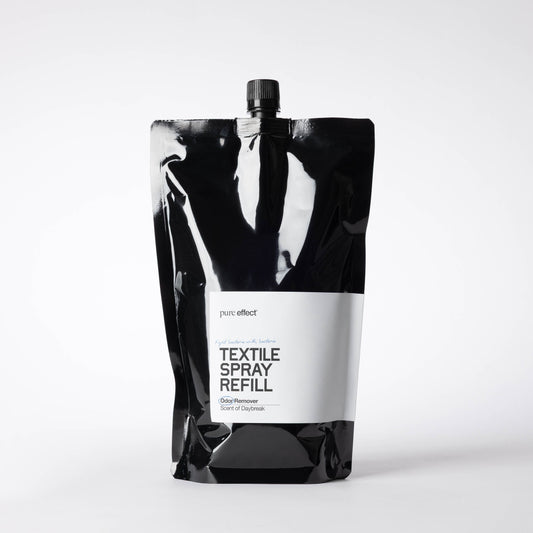
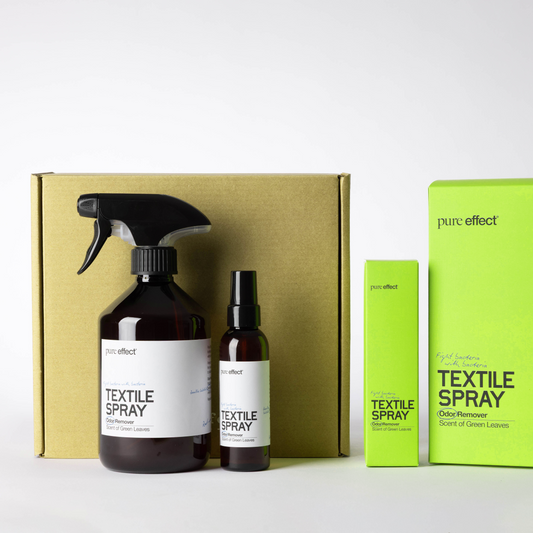
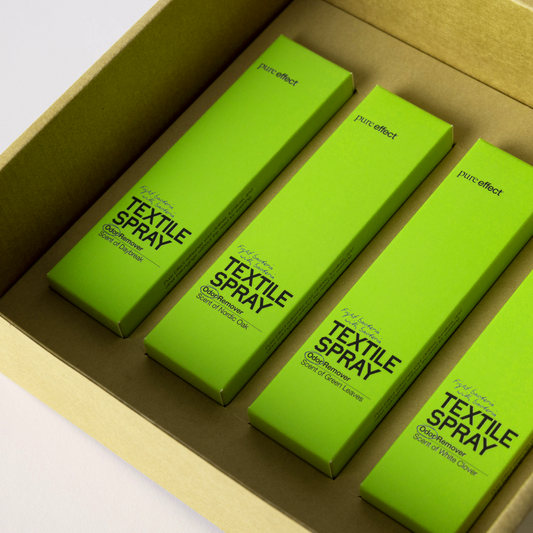
Si vous connaissez le Spray textile Pure Effect, vous connaissez déjà le principe.
Sur les vêtements, ce n'est pas la sueur elle-même qui sent. Ce sont les résidus organiques de la sueur et du sébum qui nourrissent les bactéries productrices d'odeurs. C'est pourquoi nos bactéries travaillent à décomposer la source du problème au lieu de simplement masquer l'odeur avec du parfum.
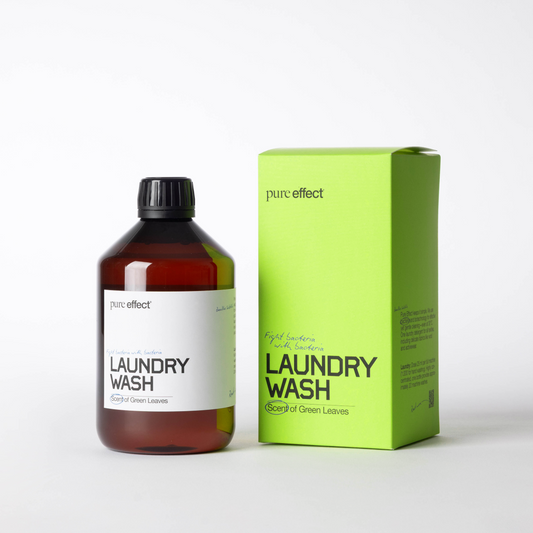
De la même manière, nos produits de nettoyage à domicile fonctionnent. L'objectif n'est pas de créer un environnement stérile, mais de décomposer les résidus organiques qui sont à l'origine de nombreux problèmes que nous percevons comme de la saleté, des odeurs et des dépôts. En même temps, ils concurrencent les bactéries qui peuvent autrement créer des odeurs.
Une autre façon de voir le nettoyage
La biotechnologie n'est pas nouvelle. L'homme utilise des micro-organismes depuis des milliers d'années pour faire du pain, brasser de la bière, faire du yaourt et affiner du fromage. Aujourd'hui, le même principe de base est utilisé dans tout, des produits pharmaceutiques et du biogaz au traitement de l'eau et à l'assainissement de l'environnement.
Pure Effect est une application quotidienne de la même approche. Au lieu d'essayer de résoudre tous les problèmes de nettoyage avec plus de chimie, nous utilisons la capacité naturelle des micro-organismes à décomposer la matière organique. Il ne s'agit pas de remplacer tout le nettoyage traditionnel, mais d'utiliser la biologie là où elle est la plus efficace.
Pourquoi nous pensons que le nettoyage biologique est l'avenir
Plus nous en apprenons sur les micro-organismes, plus leur importance devient claire. Ils construisent les sols, purifient l'eau, aident notre corps et animent de nombreux cycles les plus importants de la nature.
Pour nous, il est donc naturel de les laisser aussi aider à la maison.
Nous ne considérons pas nos produits comme un simple produit de nettoyage supplémentaire. Nous les considérons comme un moyen d'utiliser un processus biologique sur lequel la nature et nos stations d'épuration s'appuient depuis longtemps, mais directement sur les surfaces où la saleté apparaît.
C'est l'essence même de notre concept de nettoyage. Simple, efficace et doux pour les surfaces nettoyées. C'est pourquoi nous pensons que le nettoyage du futur est autant une question de biologie que de chimie.
FAQ - Questions fréquentes
Les stations d'épuration utilisent-elles des bactéries pour purifier l'eau ?
Oui. L'épuration biologique est l'une des étapes d'une station d'épuration. Les micro-organismes aident notamment à décomposer les matières organiques et à purifier l'eau avant qu'elle ne soit restituée à la nature.
Quelles sont les différentes étapes d'une station d'épuration ?
Simplifiée, l'épuration est généralement divisée en épuration mécanique, biologique et chimique. L'épuration mécanique élimine les déchets et les particules, l'épuration biologique utilise des micro-organismes pour, entre autres, décomposer les matières organiques, et l'épuration chimique est principalement utilisée pour éliminer le phosphore.
Quelles bactéries sont utilisées dans les stations d'épuration ?
Ce n'est pas une seule espèce bactérienne qui fait le travail. Les stations d'épuration sont basées sur des communautés complexes de nombreuses bactéries différentes et d'autres micro-organismes avec des fonctions différentes. Différentes espèces de Bacillus peuvent être présentes dans ces communautés microbiennes.
Pure Effect utilise-t-il les mêmes bactéries que les stations d'épuration ?
Non. Pure Effect utilise spécifiquement Bacillus subtilis sous forme de spores. Le point commun est plutôt le principe biologique, qui consiste à utiliser la capacité naturelle des micro-organismes à produire des enzymes et à décomposer la matière organique.
Le nettoyage avec des bactéries est-il une nouvelle technologie ?
Non. Les micro-organismes sont utilisés depuis longtemps pour décomposer la matière organique, notamment dans le traitement de l'eau. Le nettoyage biotechnologique est également utilisé dans le nettoyage professionnel depuis plus de 30 ans. Pure Effect utilise le même principe biologique fondamental pour le nettoyage de la maison et des textiles.
Lectures associées
- Qu'est-ce que la biotechnologie ?
- Qu'est-ce qu'un micro-organisme ?
- Pourquoi le nettoyage biologique est-il utilisé dans le nettoyage professionnel ?
- Avez-vous des preuves que cela fonctionne ?