How to keep your winter jacket fresh mid-season — without washing it
Your winter jacket is one of the most used garments in your wardrobe. It’s there day after day — and it needs to keep going for quite a while longer.
When a winter jacket starts to feel less fresh, it’s rarely because it’s dirty. More often, it’s the result of everyday wear, moisture, and gradual buildup from regular use. In many cases, airing it out, spot-treating, and freshening it up between wears is all that’s needed.
By avoiding unnecessary washing, you reduce wear, preserve the jacket’s materials and performance, and extend its lifespan — while keeping it comfortable and fresh to wear.
In this guide, we walk through why winter jackets start to feel less fresh, what to avoid during the winter season, and how to care for your jacket gently so it lasts all season long.
Why does a winter jacket feel less fresh — even when it looks clean?
Most winter jackets don’t get dirty in the traditional sense. Instead, they’re exposed daily to things that affect how they feel and smell over time: moisture from snow, rain, and body heat, especially around the collar and cuffs; everyday odors from city life, smoke, and food; and bacteria that settle into the fabric.
Because winter jackets are worn frequently over long periods — but washed rarely — these factors gradually build up. The result is a jacket that looks perfectly clean, yet feels stale or unpleasant to wear.
Common mistakes people make mid-season
When a jacket starts to feel off, it’s easy to overdo it. Common mistakes include washing the jacket too often, washing the wrong materials in the wrong way, tumble-drying down unnecessarily, or waiting until the jacket feels “too far gone” before doing anything at all.
Frequent washing puts stress on the outer fabric, insulation, and shape — and can actually make a jacket age faster than needed.
How to freshen up your winter jacket without washing it
Caring for a winter jacket mid-season is more about maintenance than deep cleaning.
Start by airing it out regularly. Hanging your jacket in fresh air — ideally in cooler conditions — allows moisture and trapped odors to dissipate. Cold air also slows bacterial activity, which helps keep the jacket fresher for longer.
Make sure the jacket hangs loosely after use. Avoid pushing it tightly into a wardrobe, especially if it’s damp from snow or rain. When air can circulate freely, moisture evaporates properly and the risk of trapped odor is reduced.
Pay extra attention to exposed areas. Odor and buildup tend to appear first around the collar, cuffs, and inside the neckline. Giving these areas a bit of extra care often makes a big difference, without needing to treat the entire jacket.
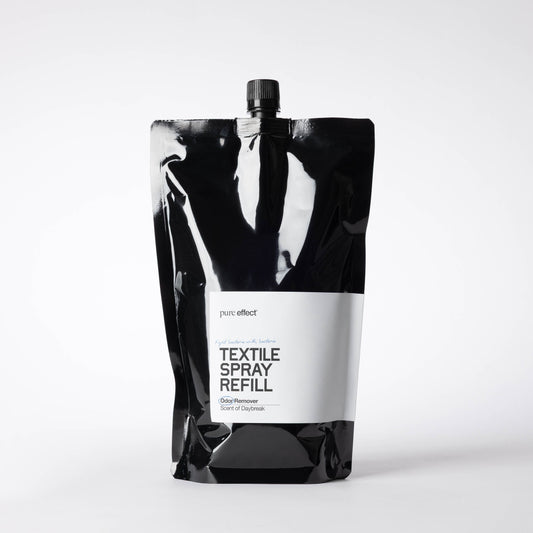
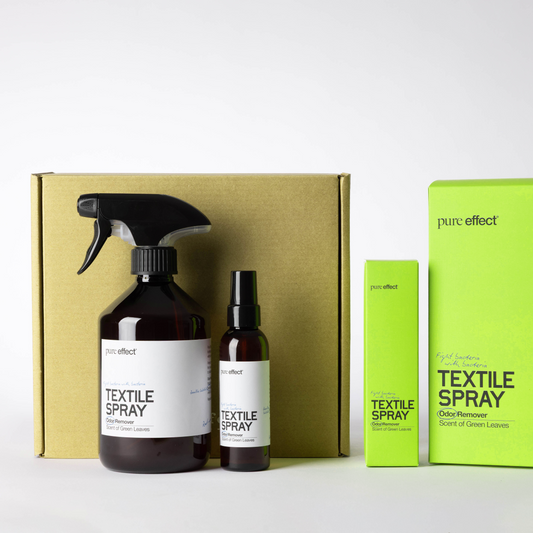
Freshen up between wears rather than washing. A gentle textile spray that neutralizes odor — instead of masking it — can help keep your jacket fresh without water or mechanical wear. Pure Effect Textile Spray is designed to freshen up textiles between uses without affecting materials or performance. Spray, wait, and let the good bacteria break down odor-causing substances, allowing the jacket to be worn longer between washes.
It also helps to let your jacket rest. Like other garments, winter jackets benefit from not being worn day after day. If you have the option, rotating between two jackets gives each one time to dry fully, reduces wear, and helps them stay fresh longer.
Makeup stains on your winter jacket — how to remove and prevent them
Makeup stains usually appear around the collar and cuffs and are easiest to remove when they’re fresh. A gentle approach works best: lightly spray the area with Pure Effect Textile Spray, then carefully wipe with a clean microfiber cloth. Avoid rubbing, as that can push makeup deeper into the fabric.
Pro tip: Using a setting spray on the jacket collar as a preventive step can reduce how much makeup transfers in the first place. A light spray before wearing creates a surface that’s easier to wipe clean and helps keep the collar looking fresh longer.
Does this apply to all types of winter jackets?
Yes — with small differences depending on the material.
Down jackets can lose loft and resilience with frequent washing, making airing and freshening between wears especially important.
Wool coats are naturally self-cleaning and rarely need washing. Airing and spot treatment often go a long way.
Synthetic jackets and technical materials can trap odor over time. Freshening up instead of repeated washing helps maintain the material’s condition.
Shell and performance jackets can lose water-repellent properties if washed too often. Mid-season maintenance is key to preserving function.
A simple way to make your winter jacket last longer
Taking care of your winter jacket mid-season doesn’t have to be complicated. By airing it regularly, focusing on exposed areas, and freshening it up between uses, you can reduce the need for washing and extend the jacket’s lifespan.
It’s a gentler way to care for a garment that’s often an investment — and to keep your winter jacket a reliable part of your wardrobe, season after season.
Explore Pure Effect Textile Spray to freshen up your winter jacket between wears →
Frequently asked questions about winter jackets
How often should you wash a winter jacket?
It depends on use and material. Look, smell, and spot-treat where possible. Wash only as a last resort.
Can you freshen up a down jacket without washing it?
Yes. Airing and freshening between uses is often preferable to washing.
How do you remove odor from a winter jacket?
By reducing moisture and bacteria — not by washing more often than necessary.
Is it bad to wash a winter jacket frequently?
Yes. Frequent washing can wear down both materials and insulation, affecting the jacket’s performance.